
Port Arthur Resident Lookup Records
A Port Arthur resident lookup works best as a set of narrow questions. The Jefferson Central Appraisal District search can connect an owner account to a situs, or property location, while the Jefferson County Official Records Search supplies the recorded transfer behind that account. The Port Arthur Public Library obituary index and historic directories offer date and listing leads. Courts, voter status, and vital records have their own custodians and limits. Treat a result as evidence for its stated purpose, not as a complete profile of a person.
| Record layer | Question it can answer | Port Arthur source | Access path |
|---|---|---|---|
| Appraisal account | Is a person tied to a parcel as owner or account holder? | JCAD owner and address search | Online, JCAD office, then Clerk verification |
| Recorded instrument | Who transferred title, and when? | Jefferson County Official Records | Online index, public counter, or TSLAC microfilm |
| Directory or obituary finding aid | Was a name listed in a particular edition or notice? | Hughes holdings and PAPL obituary index | Library, database, or archive route |
| Court index | Is there a party, cause number, or filing-date lead? | Municipal Court and District Clerk | Portal, clerk counter, or written request |
| Vital record | Is a birth or death fact available under the access rules? | Port Arthur registrar or Texas DSHS | Qualified order, mail, phone, or pickup |
Start with the record closest to the fact in hand. A current parcel address points to JCAD and the County Clerk. An old household name points to the Hughes directory run or the obituary index. A case style needs the court that created it. That sequence keeps a Port Arthur resident lookup tied to a real record trail instead of a broad name search.
Note: No Port Arthur office publishes one complete, current list of every person who lives in the city.
Port Arthur Resident Name Context
Names do not behave the same way in every Port Arthur index. JCAD asks for an owner name in “Last Name First Name” form. The County Clerk search accepts grantor, grantee, subdivision, document type, or document number. District Clerk civil pages arrange names as plaintiff or defendant. The municipal portal has separate name, citation, vehicle, driver-license, Social Security number, and business-name modes. The library obituary index uses an all-caps name line with age, obituary date, page, and status or notes.
| Port Arthur search layer | Captured field or control | How to use it |
|---|---|---|
| JCAD | Owner Name; Street Number; Street Name | Enter owner as “Last Name First Name”; omit prefix, suffix, and unit from street name. |
| County Official Records | Search Term; Recorded Date From and To; Index Only or Index and Full Text | Search grantor, grantee, subdivision, document type, or document number, then narrow by recorded date. |
| Municipal Court | First Name; Last Name; Date of Birth in name mode | Use the mode that fits the known record. Sensitive identifiers should not be copied from the form. |
| District Clerk civil index | Year page; Plaintiff or Defendant ordering; Cause No.; Filed | Use the year-specific index as a lead, then ask the Clerk for the relevant file or disposition. |
Try a surname alone, initials, a former surname, punctuation changes, and a limited date range where the official form allows it. Keep the address, legal description, cause number, or event date beside the name. A party in a court style may not live in Port Arthur. A deed grantor or grantee may not live at the parcel. A directory line proves a listing in one edition, not continuous residence.
- Situs address
- The property location used by the appraisal record. It can differ from an owner mailing address.
- Index
- A finding tool that points to a record. It may show limited fields and may not include the document image.
- Docket
- A court’s dated list of cases or events. It is a scheduling or case-reference record, not necessarily a final outcome.
- Certified copy
- A copy issued and certified by the custodian. It is different from a search result or an unofficial scan.
Verifying a Port Arthur Resident
Use an evidence ladder for a Port Arthur resident lookup. First anchor a name to a known address or historic neighborhood. JCAD can provide the owner name, owner ID, situs, mailing address, legal description, and deed-history lead. Next, look up the recorded instrument with the County Clerk. The appraisal card is a research summary, while the recorded deed is the stronger title evidence. If the question is about an earlier household, pair the address with a dated directory or obituary lead rather than assuming the owner was the occupant.
- Search JCAD by owner or by street number and simplified street name. Save the property ID, situs, legal description, owner name, and any deed-history date.
- Use the legal description, grantor or grantee name, document number, and recorded date in the County Clerk index. Review the actual instrument or request it from the Clerk.
- Check the relevant court or voter layer only for the limited fact it reports, using name variants and a year or county filter.
- For an older household, compare an available directory edition, obituary page lead, cemetery survey, deed chain, or newspaper record. Record each source date and any gap.
A useful Port Arthur result inventory keeps the data type visible. Copy only the fields shown by the official record and label their source.
- JCAD parcel card: property ID, geographic ID, situs, legal description, owner name, mailing address, and deed-history lead.
- County Clerk instrument index: grantor, grantee, document type, recorded date, volume or page, document number, and legal description.
- District Clerk civil index: plaintiff, defendant, cause number, and filed date on the captured year page.
The Port Arthur Street Directory has the full address-by-address record chain. For one person, stop when the available evidence answers the question. A no-hit in a dated index means only that index did not return a match, not that no record exists elsewhere.
Port Arthur Court Search Layers
Choose the court before running a name. The Port Arthur Municipal Court portal covers public-facing municipal case and payment searching, with citation, name, vehicle, and other modes. Its public page does not state a historic cutoff or prove that an older no-hit is final. Municipal Court is at 645 4th Street, and its published phone is 409-983-8686. A photo ID is required for court business, and a phone call is not an appearance.
The Municipal Court search portal illustrates the separate search modes available for a Port Arthur resident lookup.
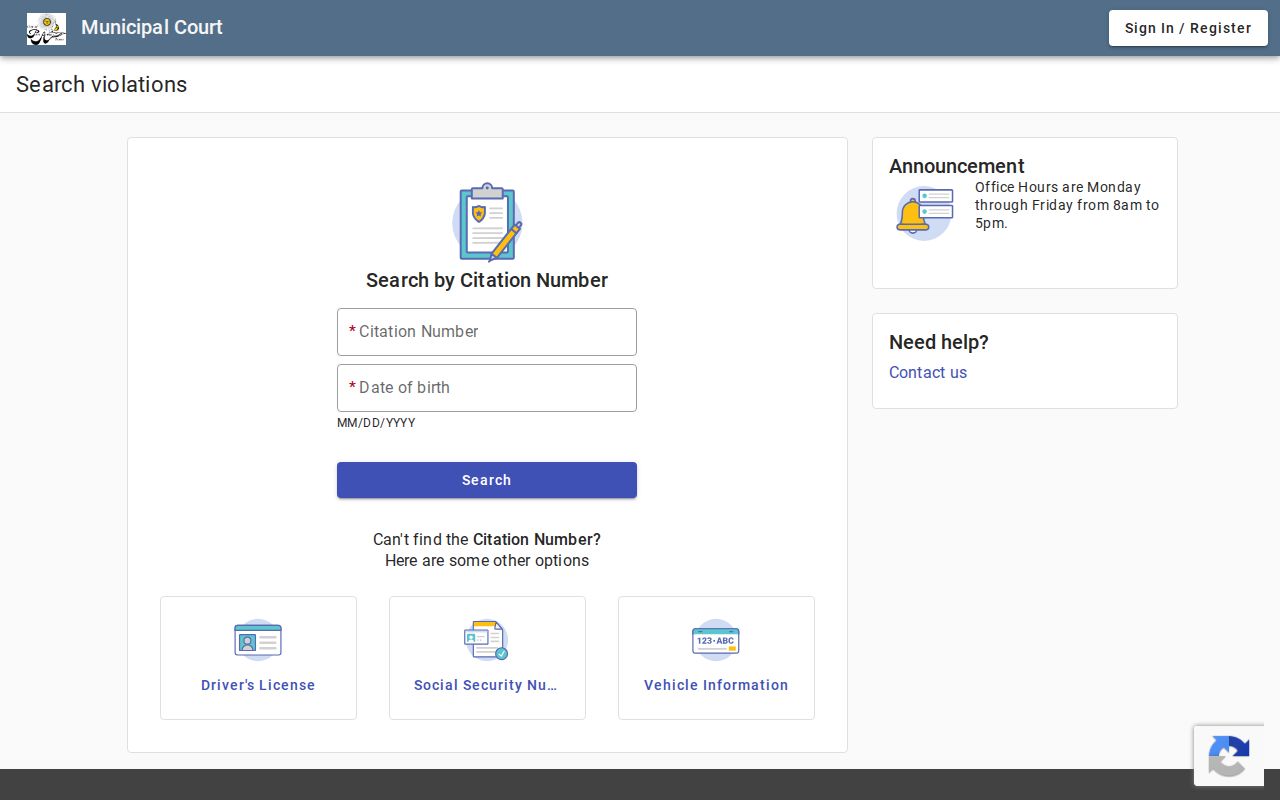
Use a citation number or other mode only when it matches the record and lawful request at hand. Do not publish sensitive form values.
The Jefferson County District Clerk civil index has public year pages from 1985 through 2022, arranged by plaintiff and defendant. Its sample result columns are plaintiff, defendant, cause number, and filed date. The office reports that other material can remain on books, film, fiche, paper, or public terminals even when the open web lacks an image.
The District Clerk civil index shows the year-based court route for Port Arthur names.
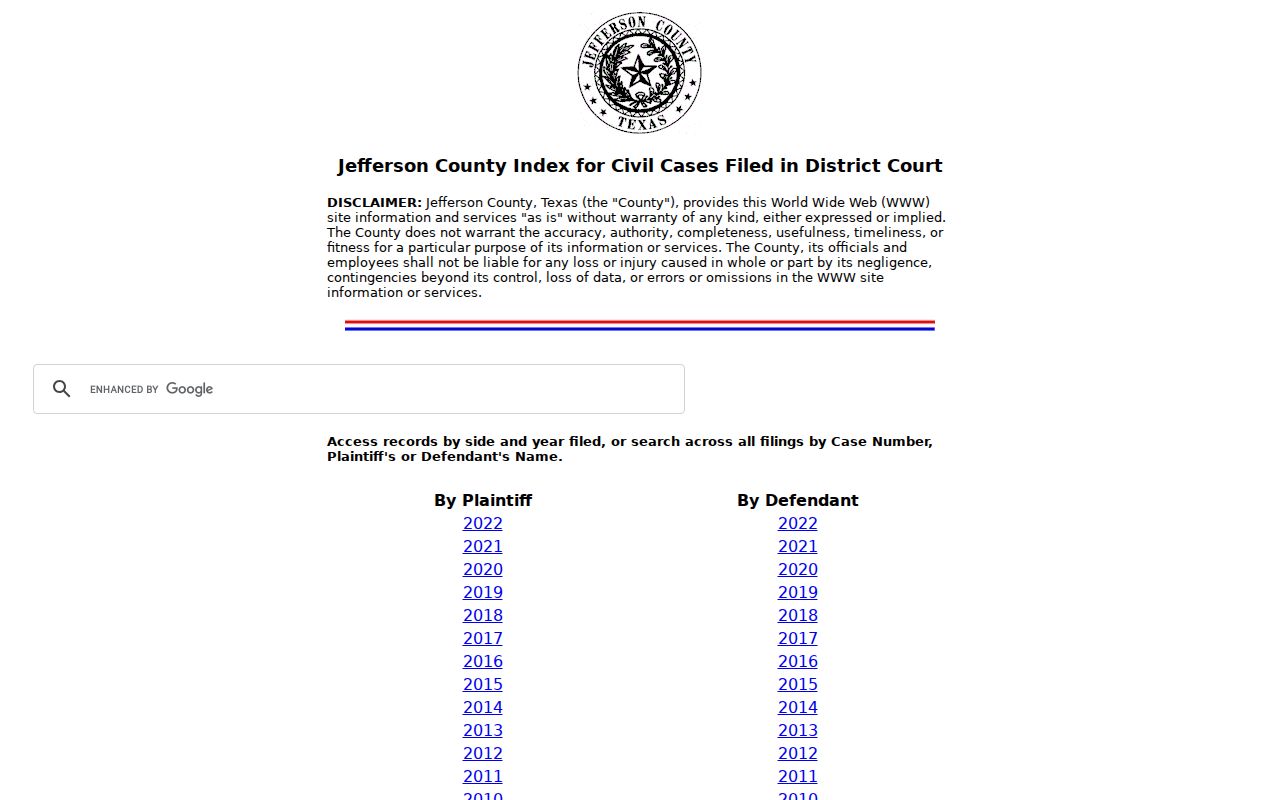
For a file, disposition, or image, contact the District Clerk rather than treating an index line as the complete case record.
Port Arthur Obituary and Vital Leads
The Port Arthur News obituary index has dedicated year pages from 1969 through 2026. An entry can show a name, age, obituary date in YYYYMMDD form, newspaper page, and a status or notes field. It is a finding aid. The newspaper page may require a library database or microfilm, and an obituary is not a death certificate. For family-history work, it can give a date and surname that help distinguish similarly named Port Arthur residents.
For a certificate or verification, use the Port Arthur Health Department Vital Statistics or Texas DSHS. The local office offers certified birth and death orders through Permitium, by mail, and by pickup. Its published instructions require the right documentation and identification. Birth records open after 75 years and death records after 25 years under Texas Government Code §552.115, subject to the stated exceptions and qualified-applicant rules for newer records.
The local certified vital-record ordering portal is the correct path when an eligible applicant needs an official copy.

Keep a library lead, a public index, and a certified vital record separate in the research notes because each has a different evidentiary role.
Port Arthur Voter Status Context
The Texas My Voter Portal is the public route for registration status and polling information. It should not be used as a certificate that someone currently lives at a Port Arthur address. County records are organized by county, precinct, and VUID, and a mailing address can differ from a permanent residence. Status can change without showing when or why a person moved.
The My Voter Portal is shown here as the official status and polling-information route.
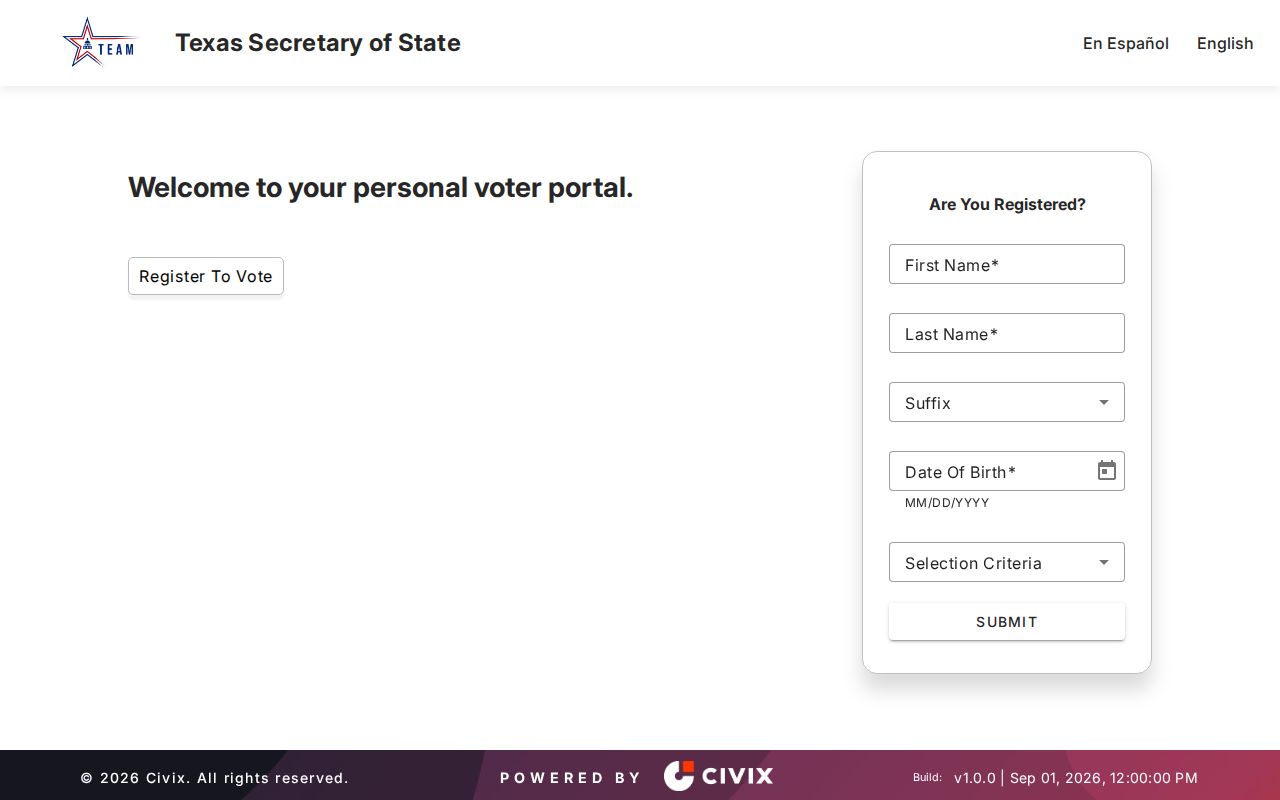
The portal’s dynamic form fields should be checked live before use. Do not record or share protected-address information, Social Security numbers, driver-license details, or other restricted data.
The statewide voter-file request form is a different process. It requires an affidavit, delivery selection, fees, and controlled use terms. It is not a casual one-name search, and downloaded voter information should not be republished.
Note: A voter result can provide status context, but it cannot prove a person’s exact residence on a particular date.
Port Arthur Records Request Routes
When a portal does not expose the needed record, use the custodian’s access channel. Jefferson County Clerk and District Clerk materials can be requested by the office’s published mail, email, fax, or in-person procedure. For city-held material such as permits, code records, minutes, or correspondence, use the Port Arthur Open Records Request route. Describe the name, address, date range, record series, and the specific items sought. Texas Government Code Chapter 552 does not require a requestor to explain why the record is wanted.
Texas Public Information Act requests seek existing records. They do not require an office to create a new person list or solve an open-ended question. Production is prompt under the statute; when it will take longer than ten business days, the governmental body must provide a reasonable availability date. For old deeds, court books, and historical files, TSLAC microfilm, the Sam Houston Center, the Hughes Archive Room, and Port Arthur Public Library may provide the needed fallback.
Port Arthur Resident Privacy Limits
Some gaps are intentional. Texas address-confidentiality programs can substitute or suppress an address for eligible people. Voter records contain restricted fields, and protected personnel can have additional safeguards. Court, law-enforcement, adoption, juvenile, victim, and family-violence information may be sealed, confidential, or redacted. The Texas Data Privacy and Security Act gives rights over covered business data, but it does not erase a government record that another law makes public.
Lawful use. Use Port Arthur records for personal, lawful research such as family history, estate questions, reconnecting, or verifying a record with its custodian. Using a record to stalk, harass, threaten, or intimidate anyone is prohibited.
If a record is wrong, contact the agency that maintains it. JCAD directs ownership corrections through recorded deeds, while a court, voter, vital, or library entry has its own correction or access process. Preserve the official URL, search date, and record number so the right custodian can evaluate the issue.