
Start a Port Arthur Resident Search
Begin with the fact that is already solid. A current street address is best checked against an appraisal account, then against the recorded deed. A full name with an earlier date may fit a city directory, telephone book, obituary index, or court index instead. Jefferson County and city systems each answer a different question, so a useful search keeps the record type, date, and place together. Port Arthur is primarily in Jefferson County, although a small eastern and industrial area can involve Orange County. Confirm the situs before assuming which custodian holds the file.
No public source is a complete list of everyone at an address. An owner can live elsewhere, a mailing address can be outside the city, and a directory line only confirms that a person was listed in that edition. Use two independent records when the result matters. For a current property connection, that usually means JCAD followed by the County Clerk. For a historical household, it may mean a directory entry paired with a deed, newspaper, census, or cemetery lead.
- Standardize an address with USPS or identify a name variant and likely time period.
- Check the JCAD owner or address search for a parcel, situs, and owner-account lead.
- Confirm a transfer in the Jefferson County recorded-instrument index.
- Use the relevant court, voter, vital, or library source only for the question it can answer.
- Record the portal, date searched, exact spelling, and any missing coverage before drawing a conclusion.
Read Port Arthur Parcel Records
Jefferson Central Appraisal District is the local appraisal layer. Its public screen offers owner, address, and advanced routes. Enter owner names in the displayed “Last Name First Name” style. For an address, use Street Number and a simplified Street Name without a prefix, suffix, or unit number. The search can return a situs address, legal description, property and owner identifiers, value data, and deed-history leads. JCAD maintains appraisal accounts, not title, and it says online legal descriptions and acreage should be verified before legal use.
| JCAD control | How it helps a Port Arthur search | Limit |
|---|---|---|
| Owner Name | Finds an appraisal account by a name string. | Try initials and variants; an owner is not automatically an occupant. |
| Street Number and Street Name | Finds a parcel and its situs details. | Use the simplified street-name instruction shown by JCAD. |
| Property ID or Geographic ID | Links later checks to one account. | It is not a deed recording number. |
| Subdivision and Neighborhood | Helps when a modern street address is uncertain. | Live option lists can change. |
The Jefferson County roster screen is pictured below because it illustrates a different kind of narrow public lookup, not a resident roll.
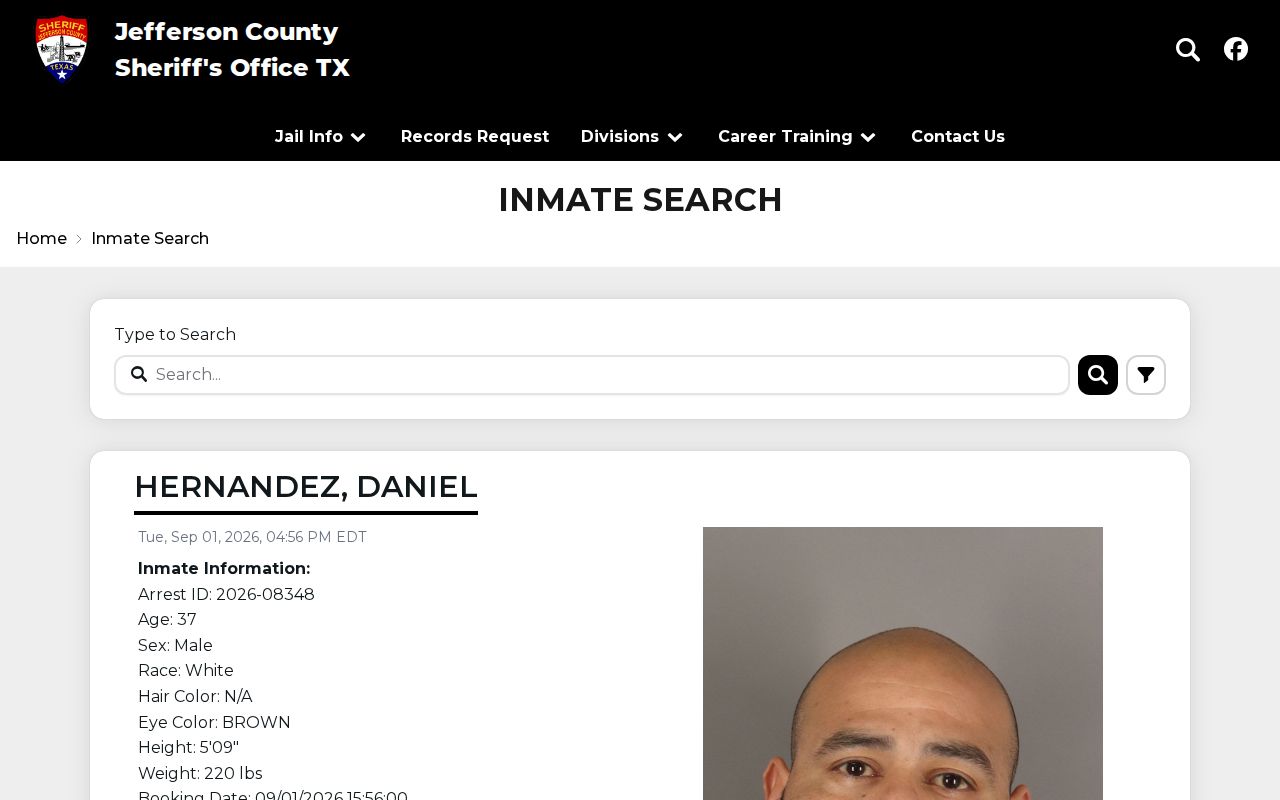
A current custody record has its own scope and update cycle. It should never be used to infer a person’s Port Arthur address or a broader personal history.
- Parcel
- An appraisal or land unit tied to a property account.
- Situs address
- The physical location used for the property, which can differ from the owner’s mailing address.
- Legal description
- The tract, block, lot, subdivision, or other land description used in official property records.
- Index
- A finding tool that points to a record. It is not always the record image itself.
Map Port Arthur Record Geography
Address results need a map check when the city label is unclear. The City of Port Arthur GIS links city-limit and ETJ, voting and precinct, zoning, drainage, coastal, street, and other map layers. Jefferson County Engineering adds aerial, flood-zone, right-of-way, subdivision, school, justice-court, election, and polling layers. Those screens establish geography. JCAD establishes an appraisal account. The County Clerk establishes a recorded instrument. A permit file can show regulated work at a location. Keeping those roles separate prevents a map label from being treated as proof of residency.
Historic labels need even more care. City boundary material records a 1913 limited extension, city-limit actions in the 1950s, limited actions in 1976 and 1978, releases near Bridge City and Taylor’s Landing, and a 2017 industrial action. A directory may use Port Arthur, Lakeview, Port Acres, Sabine Pass, Griffing Park, or a nearby community name that does not match a present boundary. No official source in the research established a citywide renumbering date, so check one address at a time through plats, Sanborn maps, ordinances, permits, and directory runs.
Confirm Port Arthur Deed Trails
The Jefferson County Official Records Search is the recorded-index layer for grantors, grantees, subdivisions, document types, and document numbers. Its quick search also accepts recorded-date ranges and separates Index Only from Index and Full Text OCR searching. Capture the party names, document type, recorded date, legal description, volume or page, and document number. A name on a deed can identify a transfer party, but it does not prove that person lived on the property.
Older work has a different route. The public portal did not publish an online historical start year in the research capture. TSLAC’s Jefferson County guide instead describes deed records and direct and reverse index reels, including deed records from 1834 to 1887 and index material reaching the nineteenth century. County Clerk counters and terminals, a focused copy request, the Sam Houston Center, and library research are useful fallbacks when the online index stops short. The address-based work belongs in the Port Arthur street directory for readers following every parcel along a road.
Use Port Arthur Court Levels
Port Arthur Municipal Court handles Class C misdemeanor and local-ordinance matters. Its public portal offers citation, driver-license, Social Security number, vehicle, name, and business-name modes, but the research did not confirm a historical cutoff, result columns, or image access. The Jefferson County District Clerk civil index has captured year pages from 1985 through 2022 with plaintiff, defendant, cause-number, and filed-date context. A party name is only a lead. Ask the correct clerk for a docket, filing, or disposition before treating an index row as a complete record.
State and federal work should not be folded into one local search. TAMES is the appellate route and refreshes nightly. re:SearchTX is a statewide trial-record platform for registered users when a court participates. Federal matters for Jefferson County use the Eastern District of Texas, Beaumont Division and PACER. Court records can also be sealed, redacted, expunged, or otherwise limited. Match the court level, year, county, and cause number before relying on a result.
Port Arthur Resident Records Offices
Three offices create the most useful first trail for a Port Arthur residents directory search: JCAD for an appraisal account, the Jefferson County Clerk for recorded land instruments, and the election system for a person’s own registration-status check. City offices are the next layer for municipal minutes, permits, court files, and records requests. Each one keeps a different type of record, and none provides a universal resident list.
Jefferson Central Appraisal District
Port Arthur and Mid-County service route
Jefferson County, TX
409-727-4611
Jefferson County Voter Administration
525 Lakeshore Drive
Port Arthur, TX 77640
409-835-VOTE
Port Arthur’s records-request portal is the city fallback for city-held minutes, permits, code files, incident records, and correspondence not offered through a public index.
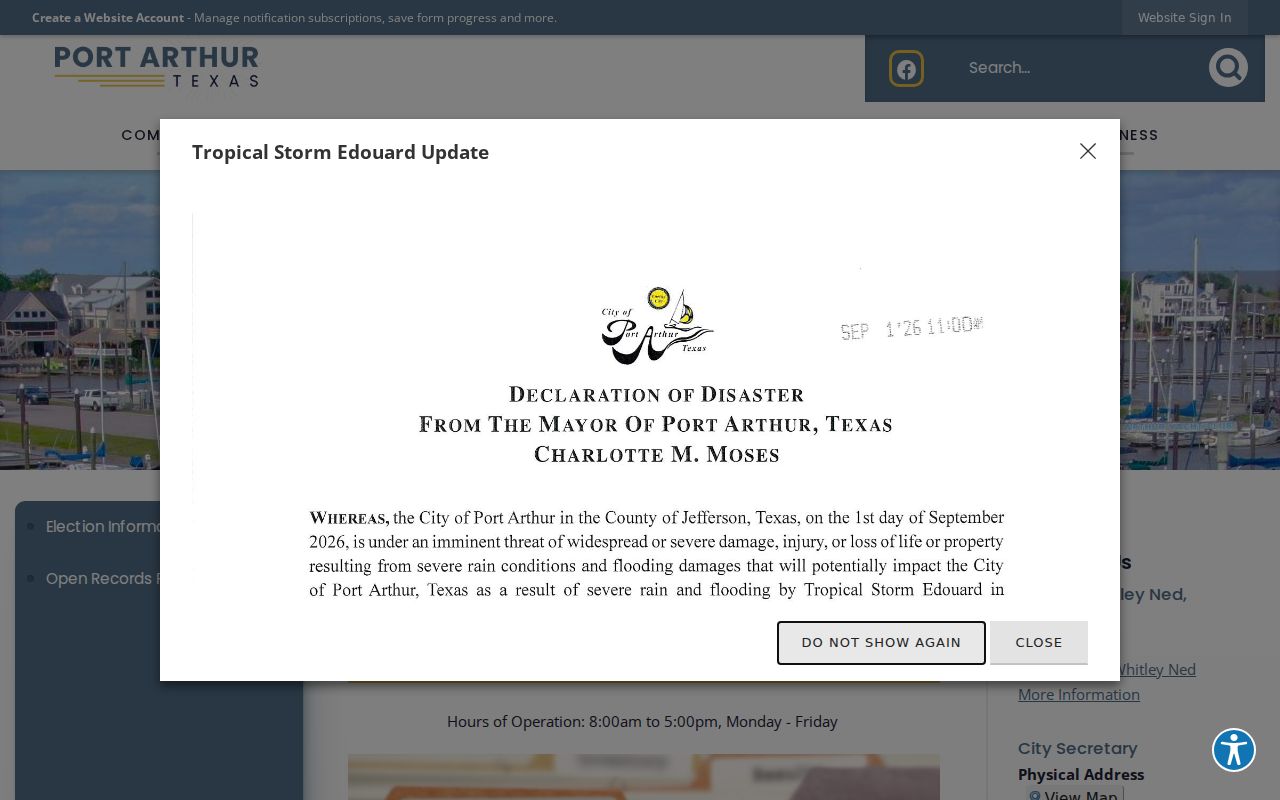
Describe the record, address, and date range rather than asking an office to create a new database or answer an open-ended question.
Current Port Arthur Resident Directories
Current sources are best treated as separate rolls with different coverage. The property account and the recorded instrument identify ownership-related information. Texas voter tools are for status and polling context, not an address certificate. Municipal records tie people to public actions, permits, and court matters. The county jail, state custody, and registry tools describe narrow institutional facts. Compare the date of each record and keep a note of what it actually shows.
| Port Arthur source | What it can show | Custodian | Access route |
|---|---|---|---|
| JCAD appraisal account | Owner-account, situs, mailing, and parcel lead | JCAD | Public portal and district offices |
| Recorded instrument index | Grantor, grantee, document, and recording context | County Clerk | Official index, counter, or request |
| Voter status | Defined registration and polling context | SOS and county voter administration | My Voter Portal or controlled records request |
| City files | Named public civic or address-linked activity | City departments | Archive, department, or PIA route |
The Jefferson County Tax Office manages tax-office and voter-administration information and is a useful point of contact when an election route needs local confirmation.
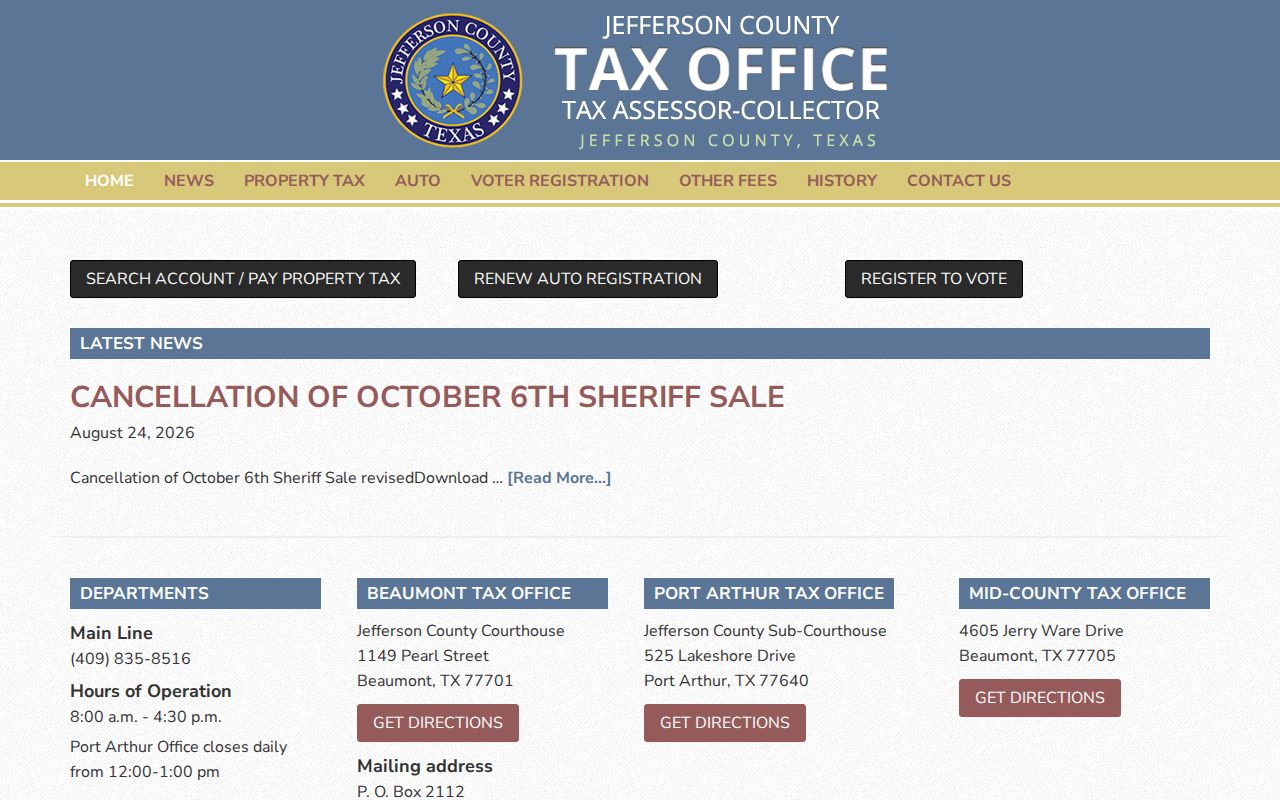
Tax and voter administration have separate functions, so use the source that matches the fact being checked rather than treating either as a general people list.
Protect Port Arthur Voter Data
The Texas My Voter Portal is the public status and polling-place route. A person’s name, date of birth, and VUID can be public in defined contexts, while Social Security number, Texas driver-license or state-ID data, and protected-address information are restricted. The statewide voter-file request is a controlled process with an affidavit, deposit, and fees by voter count and media. It is not a casual resident lookup, and voter participation does not disclose how someone voted.
Address protection also matters. The Texas Address Confidentiality Program gives eligible participants a substitute mailing address, and the Secretary of State describes alternate-address and suppression rules for protected people. A missing address or a substitute address is not proof that a person is absent from Port Arthur. Use only the public fields the relevant office makes available and never attempt to uncover a protected location.
Historical Port Arthur Resident Directories
For a former household, the library and archive shelf is often stronger than a current portal. UT Austin metadata identifies Worley Port Arthur and Vicinity volumes for 1921, 1923, 1931, 1957, and 1958. The Marion and Ed Hughes Public Library lists Port Arthur directories from 1925 to 2006 with gaps, plus Sanborn maps and newspapers. It also notes that Nederland has no separate city directory and appears in Port Arthur or Beaumont volumes. Check the title, subtitle, and page heading rather than assuming the current city label describes the volume’s full reach.
The Port Arthur city archive has keyword, archive/category, and date controls for city documents. It can place a name or address in civic context when a directory year is missing.
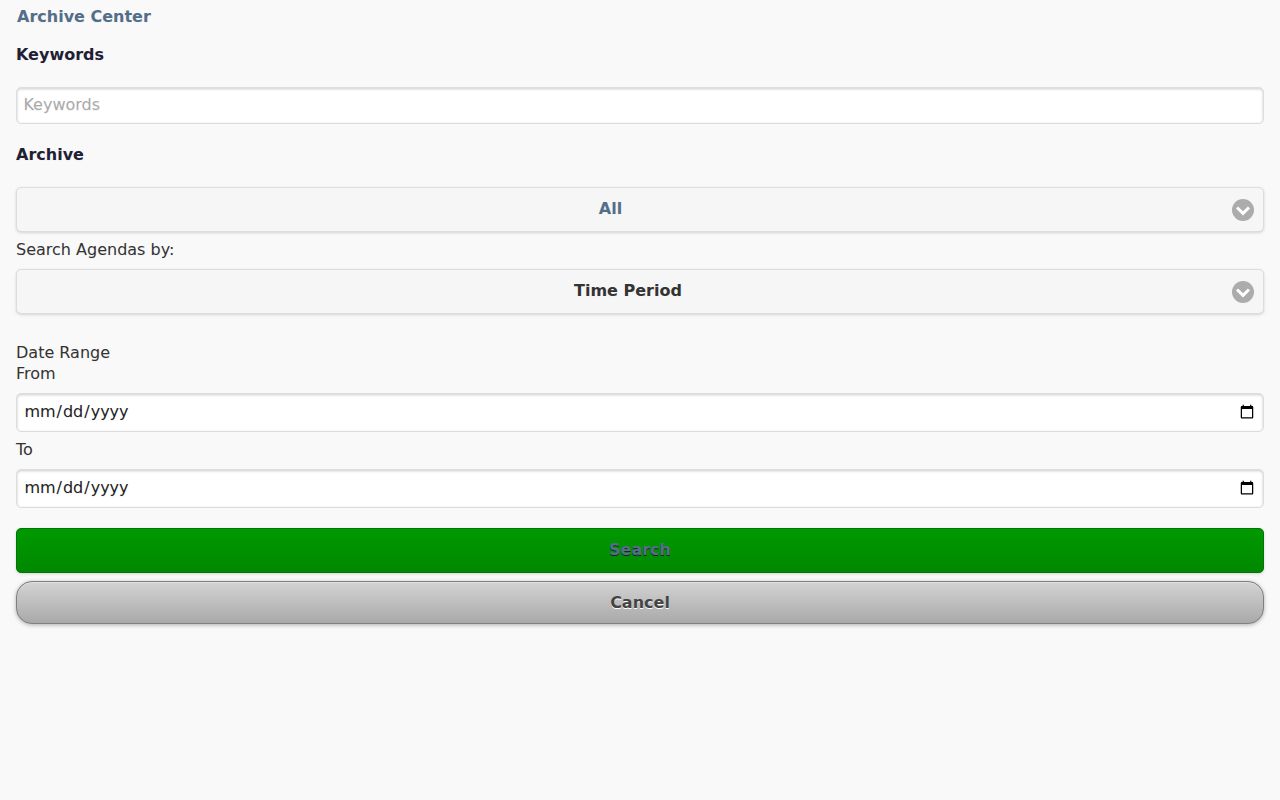
A city-document hit may identify a speaker, board member, applicant, or notice party. It does not certify a present address.
Follow Port Arthur Obituary Leads
The Port Arthur Public Library’s obituary index supplies a useful date and newspaper-page lead, with year pages from 1969 through 2026. A full notice may require a library database, newspaper microfilm, or another archive route. The library also points researchers toward genealogy resources, HeritageQuest, Family Tree Maker, local newspapers, and its Portal to Texas History collection. Those collections help distinguish a death-date lead from a certified vital record.
For a certificate or verification, use the local registrar or Texas DSHS only when the record is public or the applicant qualifies. Texas Government Code §552.115 opens birth records after 75 years and death records after 25 years, subject to limits for adoption or paternity material. Port Arthur Vital Statistics handles local birth and death service, while DSHS offers statewide products. Marriage licenses remain County Clerk records, and district court files are the divorce route.
Check Port Arthur State Records
A name in a business filing or professional-license screen is not a resident claim. Texas SOSDirect handles state entity, assumed-name, registered-agent, document, and related searches through an account, with a listed one-dollar search charge. A filing can show a role or address as filed, not necessarily a person’s current location. TDLR is a separate statewide search for regulated licenses and administrative orders, and its public fields should be checked live before drawing a conclusion.
The SOSDirect entry point identifies the state’s business-search service.
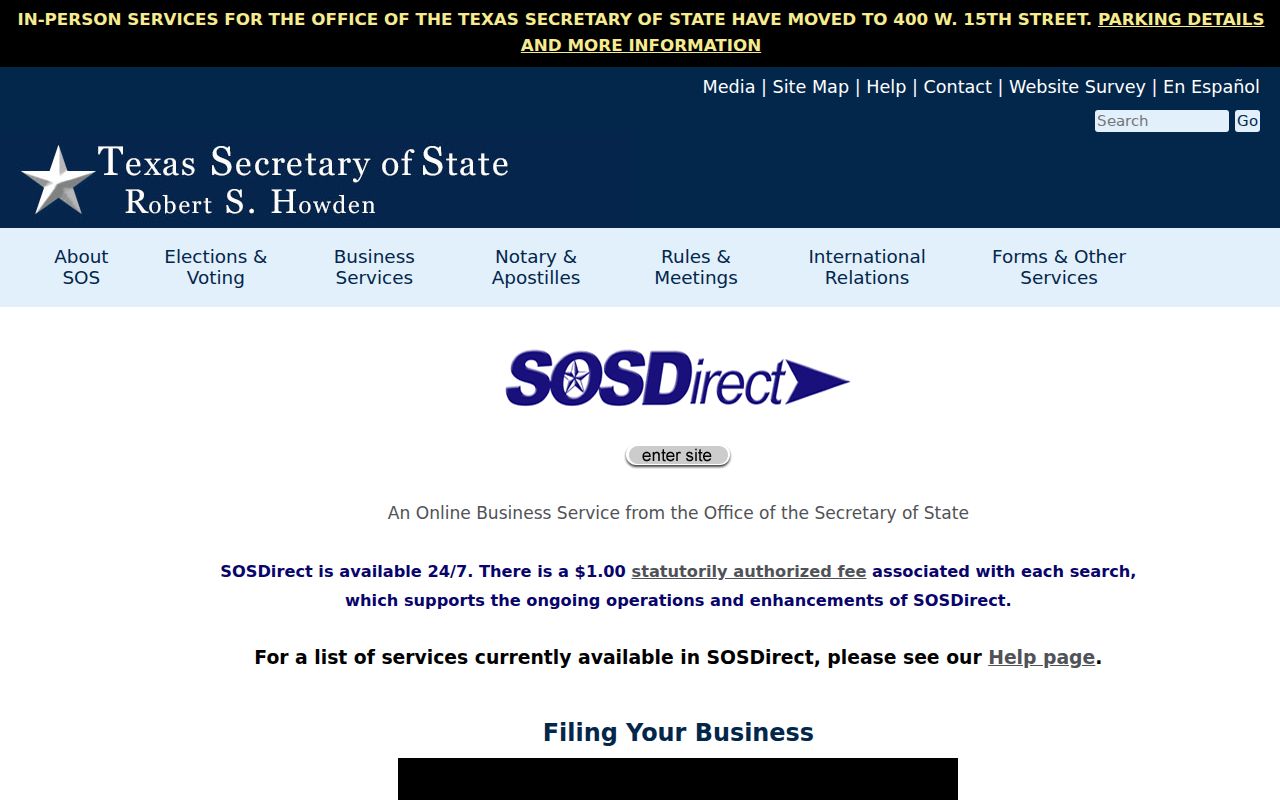
Use an entity record to verify a business filing context, then look to an appropriate local property or court record for a separate Port Arthur connection.
The TDLR license search is another state source with a different purpose.
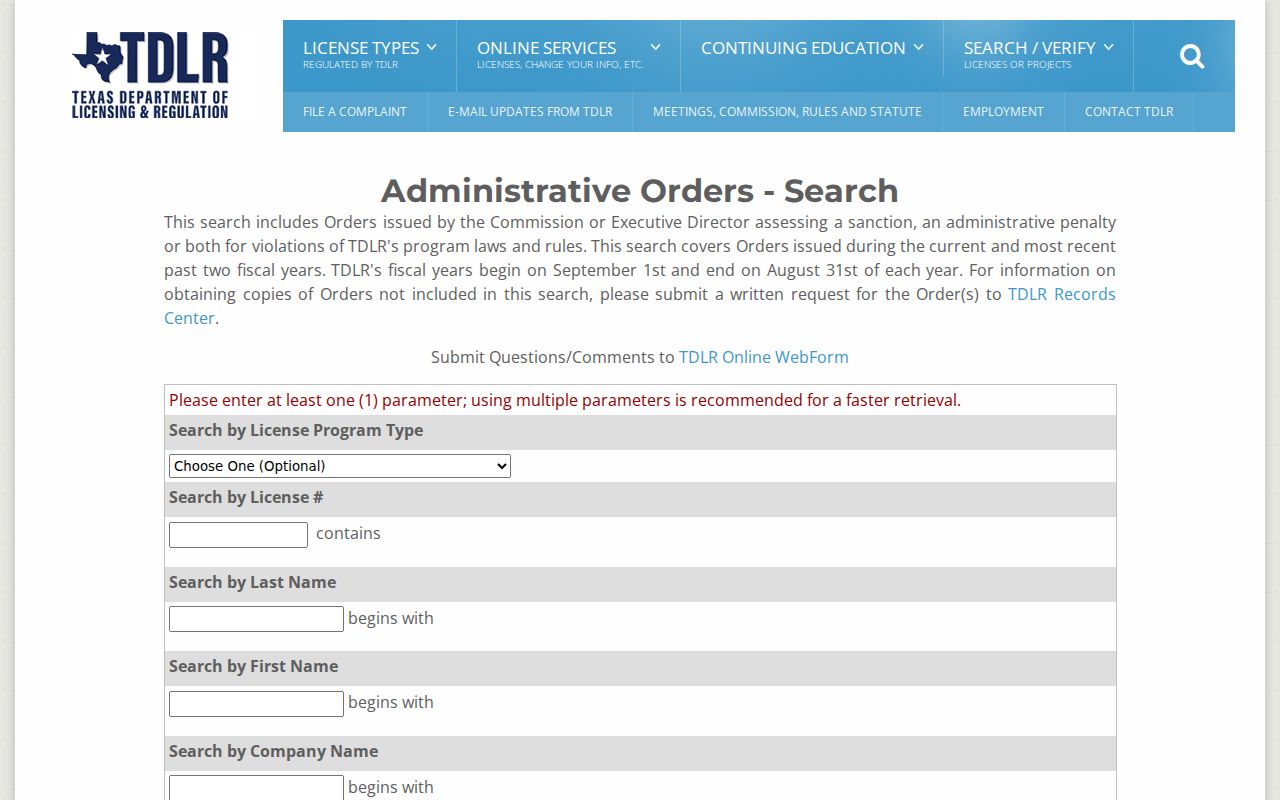
License information can confirm a regulated credential or order context. It should not be stretched into an address or household finding.
Request Port Arthur Public Records
Texas Government Code Chapter 552, the Public Information Act, provides a written-request path to existing governmental records. Send the request to the office that holds the record, identify it well enough to locate, and ask for inspection, electronic copies, or a narrow date and address range. A requester does not have to state a reason. If a governmental body cannot produce responsive information within ten business days, it must provide written notice of the anticipated availability date or applicable response.
Charges can require an itemized estimate when they exceed forty dollars, and a request can be considered withdrawn if there is no response to a written estimate within ten days. Ask first for an estimate or for a narrower record set. County routing assigns records created by an elected official to that office’s custodian. City requests go through Port Arthur’s portal or the City Secretary. Archives and library shelves remain the right fallback for older directories, newspaper runs, maps, and microfilm.
The Texas Attorney General’s PIA overview explains the statewide access framework.
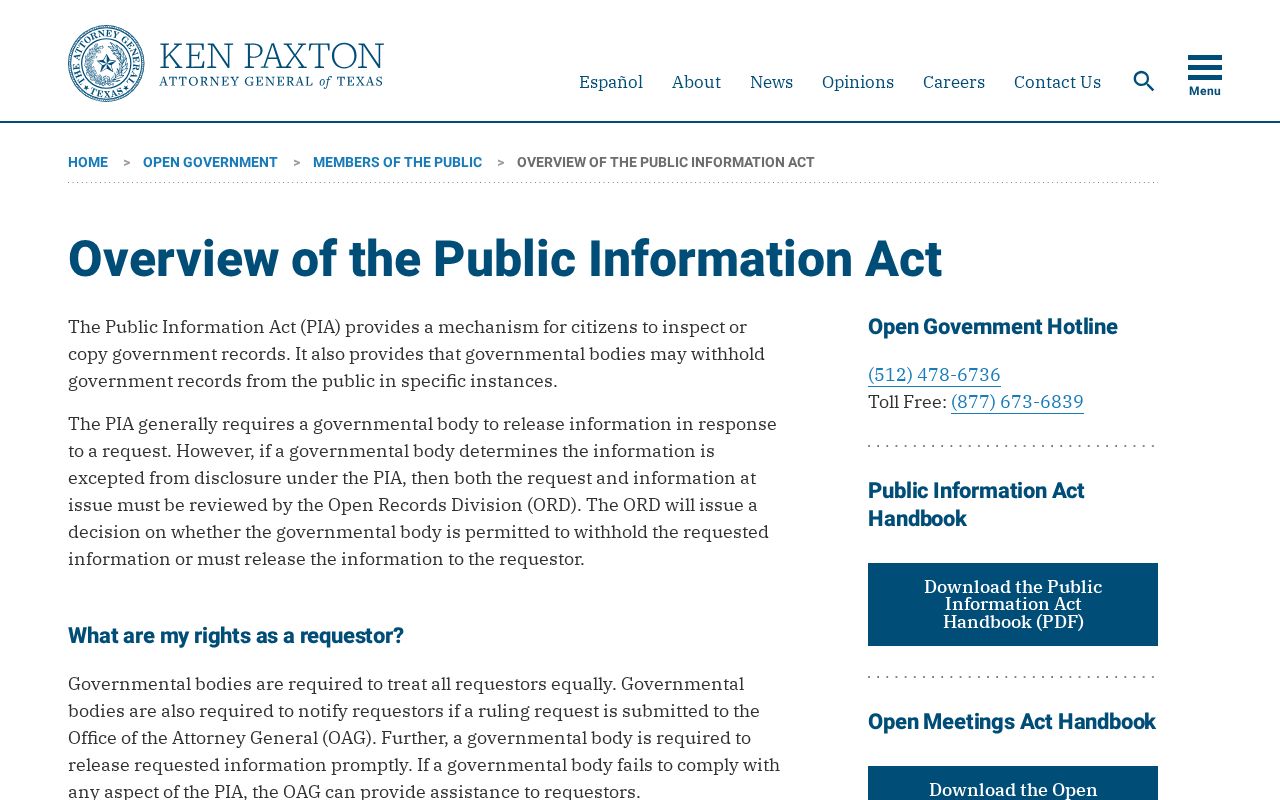
A records request reaches existing files, not a custom resident database. Precise requests help the custodian locate responsive records and identify any redactions.
Keep Port Arthur Results Limited
Use the fact a record actually supports. A JCAD mailing address can differ from its Port Arthur situs. A deed party may have transferred title without living at the parcel. A court party may not reside in the city. An obituary index is a finding aid, not a certificate. The County Clerk and District Clerk also maintain material on books, film, fiche, paper, and terminals that may not appear on an open web result. “Not found online” is a research outcome, not proof that a record never existed.
Texas protection rules apply to voter, vital, motor-vehicle, court, law-enforcement, and other sensitive information. Keep searches narrow, do not publish protected details, and verify a material result with the records custodian. For a street-by-street question, use the street directory; for a prior household at one address, use the previous-residents search. Those focused routes preserve the local context that a broad name search can lose.